Tuesday, November 11, 2014

Spoons, Part I


I've been thinking a lot about spoons lately.

A spoon is a very personal kind of utensil. It's the first one we master.

Clay does not immediately spring to mind as a medium when one is thinking about making spoons.

Metal and wood are more commonly used, but clay spoons work just as well and sometimes better than some materials. Clay won't heat up, for instance.

And while metal and wood have their own strengths and therefore their own design requirements, people who know and understand clay could design beautiful and effective spoons with certain  parameters and restrictions in mind.

Besides, spoons present unique design possibilities.

We're all familiar with the Chinese ceramic spoon, which to me has always seemed a bit difficult to use. I've always thought they would work much better as a spoon rest.

A quick Google image  search with of "Ceramic Spoons" delivers a huge amount of examples.

There are lots of wooden spoon forms that could easily be translated into a clay design, although the handles would have to be heavier and thicker:


What a difference dark and light make.

This is a good form. The base of the bowl and handle join gives lots of support.
Interesting Bowls. This spoon has two bowls and might work well in clay.


Some have interesting handles:


This handle design allows the spoon to balance on the rim of a pot. 


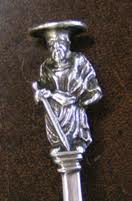
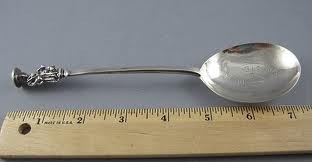
Some have unique handles.  Like Apostle spoons.

And an antique spoon from New Guinea.

This wouldn't work with ceramic unless the bowl alone was made of clay, but it's a beautiful combination.


I love the idea of making salad spoons--Short thick sturdy handles and large bowls together.

How often do you see the two coordinated?


Next: Metal Spoons and Ceramic Ones.

Wednesday, November 5, 2014

Teapots - Form

I love these pots.


They all just scream FORM.


Form is so important in the creation process. To my mind, it is the primary; the first essential.


It doesn't matter so much how dazzling the glaze is or the size of the piece or any other aspect of design or treatment applied. If the form isn't good, no amount of attachments or embellishments can will overcome that.


FORM is the statement of the piece.

My first clay instructor asked me one day, "What statement are you making with this piece?"

I was flummoxed. To me, 'Statement' meant a verbal message. I just couldn't reconcile the idea of something said and a piece of clay.

In my mind, I thought it as a ridiculous thing to say. The two things just didn't relate to each other.

But

It is the kind of thing that hangs around the corners of your mind. Now, I get it.

Each of the following pots have strong statements. Wouldn't you agree?  What caption would you add?

What Sass! 
I would almost expect engine sounds, pouring out my tea.

Who's a clever lid, now?.

So beautifully traditional. 
Perfect blend of form and interpretation.


Perfect harmony, but does it pour?


I just know there's tea inside. Wonderful balance in so many ways.

Drop the body decoration and let the form fly!

Clever lid and chain. I've got you now, tea.

So simple; so difficult.

Great blend of two forms--stylized and slick. This pot just sings.

So does this one. Just look at the negative space! Wonderful surface design.

Everything relates like a Mother and Children. Or are they Minion? 

Strong, yet light. The handle could be slightly heavier, but not much.

Perfect glaze and form. I would love to see the handle up. I almost would rather see a vine handle, though.


Saturday, November 1, 2014

Segway--An Oddity

We're at it again--Working on another house. And in a conversation with my contractor about things found within walls, I was reminded of this sheet of paper we found tacked up between the studs of the old kitchen we remodeled.  

It does make you stop in your tracks and realize that, although we live in an age we think is a bit chaotic,  the future must have looked pretty bleak in 1942 when this was printed.  


I must get this down to my local historical society for their collection.


Friday, October 17, 2014

Snakey Plates


No. 1 First design-not my favorite.
Too much like a bulls-eye.


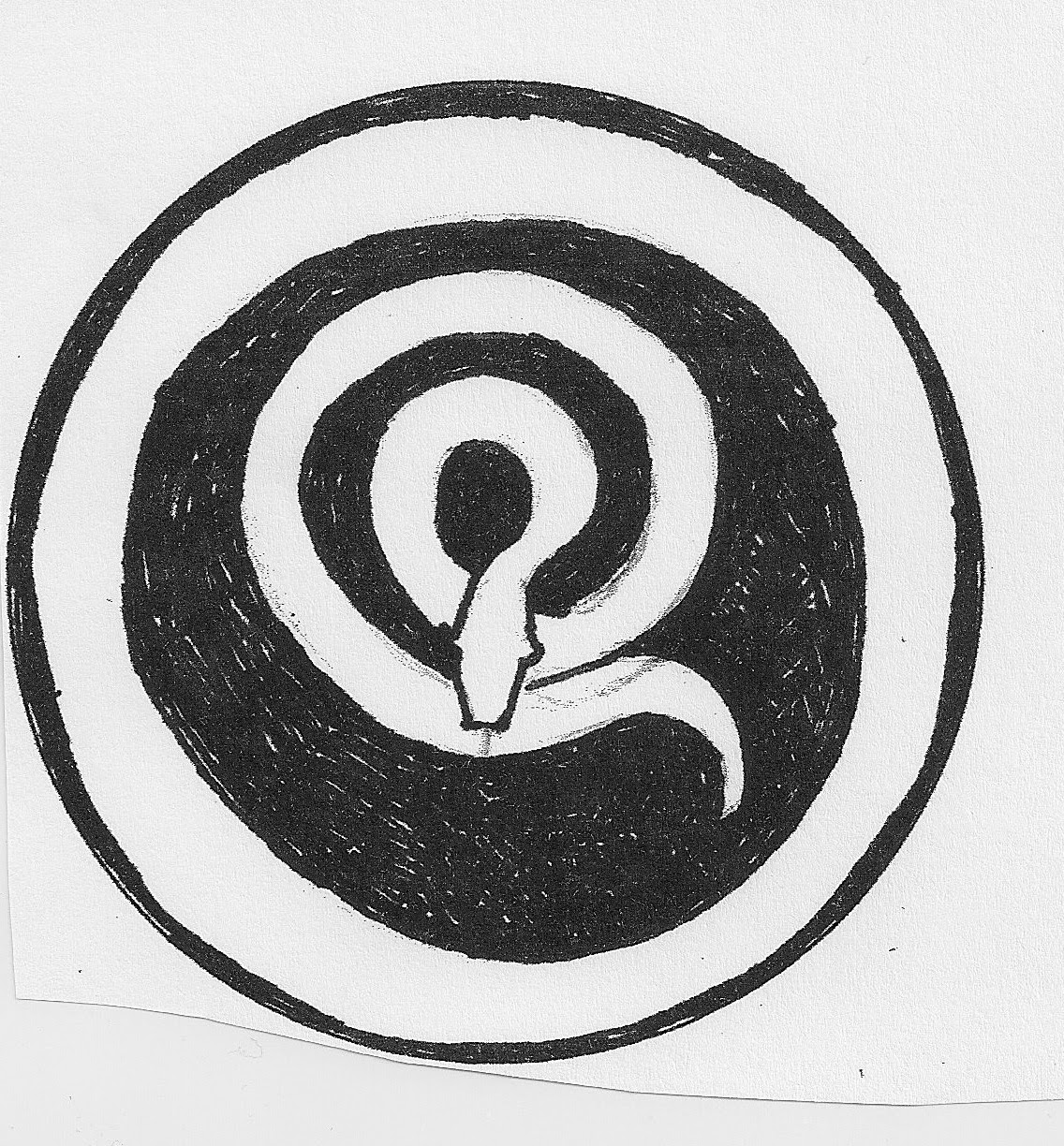
Of course I can't stop at just playing around with snake images. So I've been seeing if I can make a snake motif that says 'Snake' and also is graceful as a design.

I doubt anyone would want to eat a meal on a snake plate unless you're a zookeeper, or have a pet snake or study snakes for a living.


These are little thumbnails done with a felt pen within pre-drawn circles. So they are pretty rough, just notes and not intended for a finished piece.

In the process, it occurred to me to think about the encapsulation of the snakes in irregular fields. I like the idea, but overall the snakes are too small for the circle area.

No. 2 Second attempt

No. 3 Better design overall-more snaky.


No. 4 Tail too long.


No. 5 Probably my favorite design
along with No. 3.
So. Here's the question:  Would you want to have a set of snake plates?  Would you display them in your house? Would you ever make them?  Do you know anyone who has made them or has plates like this? 

Saturday, October 11, 2014

Playing Around with Design

Even though I don't have a studio right now, I never stop thinking and studying ceramics.

Some time ago, I made small templates of basic forms: Round and square plates. The forms are small enough to dash off a sketch or toy around with a design and variation. I can run off a copy on my printer and expand the idea or upload it into my computer.  

Here's an example:


The first one is a bit busy on the right side. And I would remove the small connecting lines at the bottom of the branch like figures.  

All in all, I think this would make a good wax resist platter. It would be interesting to try this in scraffito too.

   Here's a positive and negative of the same drawing.  (The darker snake is the original drawing.)  Although the snake image is about the same, the second image seems more of a 'fat snake'.


The third variation seems more dynamic just by adding another outline.

A lot of people do not like snakes. I'm not crazy about them, but I find their image fascinating. 

Maybe no one would want to eat an hors d'oeurvres off a plate like this.


Wednesday, August 20, 2014

Calamity Ware Update

Just got the first two plates of 4 ordered.

They are excellent. Beautifully executed and highly amusing. There's a lot going on there. Even the borders are intricate and chuckle-worthy.

The great plus is they are dishwasher and microwave tolerant. Can't wait to use them.


Saturday, August 16, 2014

Not your Grandmother's Blue Willow Ware


These plates are hilarious.*

Don Moyer started his project with the help of Kickstarter, a company that helps entrepreneurs get the funding for projects.

*Plate #1:  Invasion of flying monkeys a la Wizard of Oz


The plates seem to be going very well. Four plate designs have been done. Three on the market and available to buy now. The 4th is waiting for pledge funding to start production.

They're microwave tolerant too.

Paste this into your browser: https://www.kickstarter.com/projects/159974695/calamityware-dinner-plate-4

The runs are limited to a certain edition amount, so if you are interested, check it out.

More info is here calamityware.com

and on Facebook.

P.S. I have no financial interest in this project and will not profit in any way from the sales. (Except to hope he keeps on designing these beauties
and I can order more as they come out of production.)

Monday, August 11, 2014

Donations to Charity


Raku Torso


The question of donations comes up often.

Charitable organizations ask artists to give them a piece of their work to be sold or auctioned off.  There's nothing wrong with that,  but---

I have contributed pieces of my work, but I'm always a bit irked by the assumption that artists are expected to do this.


Maybe it's the assumption that artists are easygoing, kindly creatures because they are 'sensitive and creative and full of soul'.  Well, we may be, but we also have to spend money to make money and be business people or we wouldn't be making art for long. We're not flower children and we don't live on air. But start THAT conversation and you will soon see their dust.

A lot of us either work at another job or our spouses work to support us or we have some sort of resources that allows us to make our art. Even Leonardo had to have someone to pay his bills, for pete's sake.

Sure, sure, there were and are some rock stars in art, but for the most part, we aren't rock stars, we're working (emphasis on the working) artists. And for most of us, we'd go crazy if we didn't make things.

I wonder how many of them give their work away?


So, what to do?

What I would really like to say is, "What do you think I am, a charity?"

But you don't; you just---


1. Grit your teeth behind your smile and donate a piece that's not your very best, but one that's okay to give away.

             And we all get short-changed.

2. Say, "No, I never donate work." Or "I only give to certain organizations." Or "I've reached my cost limit on contributions. "  (The last isn't such a bad a response.)

But you can't win.


The other myth that comes right on the heels of the donation request is, "It's okay, you can write it off on your income tax."

Not true.

You can only write the cost of your materials.  Not the value of the piece, not your time. An artist can't evaluate their own work for tax purposes. And only when you sell a piece can you take the cost of materials.


Here's a Better Way:

Request the organizer budget in the cost of the piece and buy it from you. The cost gets included in their budget and probably can be written off as show expense. They become an example of "Supporting the Arts", a much talked-about idea, but a not-enough-done-about action.

You get paid upfront.

The organizer sells raffle tickets or runs a silent auction for the prize. They gain funds against the cost of the event. (To say nothing of gaining additions to their contact and mailing list) Your work is on display and becomes the center of attraction.

The winner/buyer can take the cost off THEIR income tax as a contribution.


Everybody wins.


Garden Sculpture; Water Fountain