Showing posts with label home decorating/design. Show all posts

Tuesday, November 18, 2014

Spoons, Part III - Ceramic Spoons and Glazes

One idea is to make different shapes; same glaze.  Notice each spoon has a hole in the handle for hanging.  Maybe a composition display in the kitchen?

I like the homey looking blue and cream utility spoons here. Strainers, measurers, dippers, salt spoons, scoops, lots of uses for a well-glazed, washable tool.

Great use of theme and variation. 
Owl spoons. So Picasso-esque.


Embossing with stamps makes interesting, if maybe not-so-practical spoon bowls.
Great breaks in the glaze on these spoons.


Spoon or spoon rest? You decide.


Simply charming spoon.  

Do you see the little man?

A child would absolutely love this.

Monday, August 12, 2013

Medium and Large Sized Bowls

Seems as though people make either small bowls or really big bowls. I hardly see medium bowls at shows. Yet, these bowls are sometimes the most useful.

It may have to do with kiln fit--small bowls can be placed around the perimeter; big bowls take a lot of kiln room, but are more impressive and therefore can be more expensive. Medium bowls are sort of misfits.

"Geographic Bowl"

This is a bowl I made in another studio setting than my own. It was an experiment with a different clay and different studio glazes. It's good to work with unfamiliar materials sometimes.

(Unfortunately, it is no more--lost when we had the flood and the packers didn't know how to pack pottery.)

It was about 6-7 inches across and of medium depth. Very handy size.


"Snowflake Bowl"  

This is another glaze test mostly. And it is a slightly bigger and deeper bowl than the previous one. The white glaze was poured in first, then the maroon glaze rolled around the rim. Great contrast where both glazes overlapped and were poured out.


"Gold Leaf Demo"

I love this bowl. It's totally useless, but I just like to look at it.

I was doing a demo about how to apply gold leaf and used this earthenware bowl to show the contrast in surfaces.

Come to think of it, since this is a non-utilitarian bowl, I wonder if another surface application like acrylic paint would be added to either the leaf or sealed earthenware???

Could be interesting.


"Flower Bowl"

Here's where painting with glaze works. The base is a yellow matt glaze. I decided to add green organic-like leafy applications and then use a stain for the darker cobalt blue and brown accents. 

This is a medium to large bowl, quite shallow, but with a larger circumference. This bowl barely left my hand in one of my first shows when it was snapped up. 


"Great Wall of China"

This very large bowl was a challenge. It is a monster. All hand-formed, it was made using a big, awful orange plastic mid-century salad bowl as a mold for the top and a paper pattern for the base. I worried quite a lot about getting a good fit between the two parts and about firing it, but it all went well.  This piece is still in my collection. It is worth an encore, I think.  

The glaze is Coyote Shino. It was murder to glaze; very cumbersome.


"Big X Bowl"

A very early piece, this is another bowl made using hand building over a form. Early in my claywork, I used mostly white or clear glazes, focusing mainly on form. It was quite large. The black glaze was slapped on using a big paintbrush. A second layer of a plumb brown glaze was laid on over that with a smaller brush. 

I made this after working on another piece that required very detailed and meticulous work. It's good to lash out on something else a bit, just to release that energy.


Not pictured here are bowls made using a blowtorch while throwing on the wheel to hasten the drying of the clay. Although a bit frightening at first, the Ken Turner workshop I took some years ago dispelled all that fear and I love to make whopper bowls using this method. Ken is doing a workshop on foil sagger firings right now. You can find him on the web.


The good thing about medium to large bowls is the opportunity to work with a bigger pallet and surface; make a bolder and a more eloquent statement. And, as in the "Snow Bowl" and the "Flower Bowl" expand experiments on a larger surface.

Monday, July 29, 2013


Recently, I saw a posting on Remodelista.com, an excellent design website. And, since good design is always of interest, I posted a comment and reposted the below from a few years back......  

These are my safari chairs.  They came from Peshawar, Pakistan, and were manufactured around 1970 by a man named M. Hayat. 

The chairs are designed to come apart and will fit into transportable canvas bags. They are leather and rosewood with brass fittings.

This is handy since over many years of moving courtesy of the U.S. Navy, our chairs have alternately graced our living room or sat sleeping in their bags in some basement or closet.

The Backstory:  They have many names, we referred to them as Safari chairs, but Rookhee chairs is another name. They are sometimes classified as campaign furniture. The original chair design came from India during the British Raj. (At least that is the time the chairs became known among the British community.) 


This concept of a compact, portable chair expanded into other household pieces of furniture as well. Even canopy beds, as the photo shows, were designed to be taken apart and transported easily from the hot summer lowlands of India to the cooler mountainous regions.

Those Victorians took everything with them. One source says:

"Campaign furniture is primarily military, often multi-purpose with folding or separable parts. A sofa-cum-bed was first seen amongst Campaign furniture. Legs were made to unscrew, and the chair backs came off.

Made in British India from the late 18th century through the 19th century, this kind of furniture consistsof such pieces as chairs, tables, settees, chests, desks and beds. While it provided comfort, it also maintained the prestige of the officers. It evolved during the Georgian, Victorian, and Edwardian eras of Great Britain.

The only catch was that the more portable the furniture became, the more the officers ordered it. Reports suggest that "60 horses, 140 elephants, two or three hundred baggage camels and bullock carts without end" were used to transport the Governor-General and his two sisters up the country from Kolkata.

You could get a portable billiard table, folding chessboard and a portable shower."


Assembling one of these chairs makes me think of something akin to saddling a horse. The leather seat has lacing on the bottom and is slipped over the front and back supports. The front and back also have leather belt-like straps that tighten. The leather backrest slides down over two upturned side pieces that pivot and the armrests are leather straps that attach from the backrest to the front leg post. The chair is designed so that when a person sits on the seat and leans back, the weight of the sitter creates tension making a very sturdy, supportive and comfortable chair. The original chairs had enough flex to adjust to uneven ground.


My Story:  I discovered this chair when we were stationed in Bahrain in the early 1970s. I saw a couple at a friend's house and got all the information about the manufacturer. I called Mr. Hayat long-distance in Pakistan, to asked about the price and how to go about ordering a set. Mr. Hayat said he could ship them to me via Dhow and they would be ready in a few months. I ordered four. (I'm sure I couldn't have paid more than about $20-25 dollars for each chair since at that time, we didn't have a lot of money.)

After a good bit of time, I got a call from the Head of Customs in Manama, Bahrain, requesting that I come down to his office at the port to 'talk something over' with him. After scratching my head for a minute, I realized that the chairs had arrived. I assumed that some kind of import tax may be due, so I loaded my children up in the tiny car we had and headed downtown.

I was welcomed into the Head of Custom's office and we were made comfortable with soft chairs, sweets and casual chit-chat while a man went to get the reason for my visit. He arrived with a large canvas bag which he placed on the floor and stepped back. We all looked at the bag. The Head of Customs asked if this was my shipment. I said "Yes, I think so," sort of puzzled by the whole production.  I said there should be three more bundles just like this one. Mr. Customs asked if I would please open the bag. Puzzled even more, I said, "Sure" and then it dawned on me.

My chairs had been made and shipped from the area in Pakistan famous for handmade rifles and other firearms. Guns were forbidden in Bahrain. I was under suspicion of being a gun-runner!

I could hardly keep my amusement under control. I said, "It's a Chair! It comes all apart and fits into the bag. Here, let me show you." and while they (more men had trickled into the room by then) all took another step back, I opened the bag, pulled out the legs and supports, unrolled the leather back and seat and gave a demo, with running comment, on how to fit together a safari chair.


We've had the original four chairs since and, in the course of raising teenagers, one chair was enthusiastically flopped into and the back seat support got broken. So, it and the other three chairs have been stored in the basement for some time. One day while cruising the net, I happened to see an exact duplicate set of two chairs listed on an antique site. An Inquiry about price caused me to almost fall backward away from the computer screen. 

It sent me to the basement really fast to take a look at mine. I had wanted to replace the one, but couldn't even think of buying two (they Had to be sold as a pair). The asking price was incredible. Even with the wheedling I did with the seller got me a price reduction, but it was still just too high, so I shelved the idea and considered finding a woodworker who could either repair or replace the broken piece.

Within a few weeks, ANOTHER chair came up for auction on eBay. And this one included the ottoman shown in the picture. I had never seen an ottoman before in the Middle East and certainly not here either. I won the chair (at a considerably lower cost than the ones on the antique site) and after a space of some 26 years, had replaced the broken chair and got an ottoman too.

But it even gets better. After the sale, I found out that the man who had it lived within a short driving distance of our house. We arranged for a central meeting place for us to pick it up and had a very nice visit with him and his wife to boot. Turns out, he was very relieved because the chair had never been disassembled and he was worried about packing and shipping it.

But wait, there's more! Within about another week, YET ANOTHER Chair appeared on the web. It looked awful. But only because whoever had put it together did it incorrectly. The seat was looped around the side supports instead of the the back and front ones. The result was the chair sagged and the seat and back looked like they didn't fit. I bid on and got the second chair at an even greater bargain.

Footnote: The chair that had never been apart did disassemble easily. The only difference between it and my originals was a metal name plate attached to the back.

Since the spate of Safari chairs on the web, I haven't seen another listed. Occasionally, ones supplied with special edition Land Rovers, some canvas versions or or light brown leather ones designed in Denmark in the '50s and '60s will appear, but so far, no more black leather, brass and rosewood ones. 

----original post

Today:  If one or more of these chairs are within your budget and if you do or might live a mobile life, I highly recommend them as an investment that will stand the test of time. 

Saturday, March 3, 2012

Me, No More


Finally!

The last workman has left the building.

Even though we've been back in the house after the flood,* there were still things that needed to be tweeked.

The mystery flickering lights in the bathroom and the occasional whiff of gas from the cooktop, to mention a few.
Both we and the electrician (who is now talking to himself even more than he did before) have racked our brains to try and figure out why our bathroom lights flickered at unpredictable intervals. It was like trying to shave or wash your face in an old movie theater. The mystery was finally solved when a new separate outlet was installed.

Our gas cooktop emitted a slight whiff of gas every so often and investigations by the installers and finally a gas company expert pinpointed the source under the cabinets at the regulator coming into the house. He immediately 'red tagged' the line and shut everything off. Which condemned me to cooking once again with an electric skillet. I should have never bought the thing. Instead of meals out, I have had to become an expert in one-pan meals.

Although I do have the microwave and the oven, I don't like microwaved meals and there's just so much you can bake. I'm more of a 3-pans going at the same time kinda cook.

But now I'm free, Free, FREE of the skillet, the workmen showing up every day, the bottling-up of the rabid Schnauzer who wants all their guts for garters.

Yesterday, I reinstalled my big tables in the garage, sorted my glazes and tools, rehabbed my clay and threw two big platters and a big bowl.

It's nice to be back to undisturbed studio time.

(Maybe I should have put the "Me" sign on the person on the top of the pile.)

*In June of this year, the water filter connection under the kitchen sink failed and flooded the house with about 2 inches of water. Luckily it was discovered quickly and a professional disaster team was on the scene with fans and rescued most of the furniture. Our insurance covered most of the damage, but attending to the aftermath has taken every bit of the time from the initial disaster until this last week. Everything is repaired, restored, and we essentially have a nearly new house, BUT I wouldn't recommend this as a plan for remodeling.

Monday, January 9, 2012

New Year


Well

It's been a while.

We finally got our winter house back just before Christmas. Just enough time to dig out a couple of topiary lighted trees, put a wreath on the door and a ribbon on the house numbers. That was it.

The rest of the time was taken up with moving back in and sorting everything out. Imagine unpacking boxes someone else packed up for you.

When the flood happened, all our things were quickly moved out of the house, packed up and stored away by the recovery company and the contractors came in to remove drywall down to the studs, doors, carpets, cabinets--everything attached to the walls.

It's taken six months to restore the house. Our insurance paid for most, but of course, we did not want to re-install the old stove, sink and microwave. There were things about the house we didn't like. Wall-to-wall carpet for one, so we elected to pay for new tile floors. There was a desk in the kitchen that was a store house for miscellaneous tools, polish, cleaning supplies, so I had the carpenter rework the space to make a utility closet and a home for my old rainbow vacuum. A hall installation of upper and lower cabinets which were not useful became a beautiful new linen closet.

The whole house had to be painted, so we selected soft tones of a buttery yellow, a soft blue and very light green.

Most things that were water damaged that could be repaired were fixed. We did lose some pieces of furniture, most of which were covered by insurance, but our rugs (not the wall-to-wall) didn't fare so well, so we are now living in a house with no curtains or rugs to soften the sound. Pretty echo-y at the moment.

But

We're getting there.

My studio is semi-unpacked. And I still have a lot to attend to before everything will settle down so I can once again concentrate on clay.

Yeah!

Monday, October 31, 2011

Finally!


The workmen have left.

Only a few things remain to be done to make my new kitchen complete: The addition of a stainless steel work table and finishing off the pull-out pantry shelves, adding the soft close to the cabinet doors and a small piece of metal to conceal water pipes going to the new baseboard heater.

My new kitchen is such a joy to work in. It is so much more efficient than the old one and I haven't even filled up all the new storage that was gained.

I'm waiting to photograph it in total with comparative before and afters, but for now, here's a hint:

Shown is the old kitchen with the low ceiling and the parquet floor. The only thing we kept was the 'fridge. The new kitchen has a lofty ceiling and a refinished original floor we found hiding underneath the parquet and an old linoleum floor.

Monday, September 19, 2011

More Progress.....

The kitchen is coming along.

The beams have been reinforced and the Insulation is in, as are the light cans.

We even gained a widened door leading into the living room. (not showing, however).

I had debated long and hard about whether to have a whole-room concept with a bar dividing the living room/dining area and the kitchen or to have two distinct rooms.

In the end, decided I wanted the kitchen to be separate.

Adding a bar would virtually put the kitchen in the living room and, since it that room is very large and long, I wanted it to stand alone.

Also, the area where the kitchen is serves as a main traffic area between the front and the back of the house. Putting a bar in the middle of that would not be a good idea. (A main bearing wall also had something to do with it.)

The new kitchen has been opened up visually to a very large degree and it should be within it's own space.

We also gained even more view of the bay from there. And glimpses can be seen from the living room area.

This view is looking toward a small walk-in pantry to the left and the sink location under the window; the stove will be where the metal vent shows at the right.

I'm going to have the wooden wall showing at the back of the room; this is the original wide wooden boards that framed the house. It is shown in at the back of the room in the first shot.

Wednesday, September 7, 2011

Saga of the Safari Chairs, Reprise

You may remember this post from May 20, 2008:

These are our chairs. They come from Pakistan, manufactured in Pershawa around 1970 by a man named M. Hayat. They are made of leather, rosewood and have brass fittings. The chairs totally disassemble and can be transported in canvas bags.

I just received a note from a lady who is repairing one of these and she was asking about the seat lacing.

The seats are one rectangle of black buffalo hide perforated with eyelets at the ends.

The ends are placed over the rounded front and back pieces and curled around to the bottom, then laced with heavy cotton cord. If you didn't get the cord, check with fabric supply stores in the drapery department. Cotton is the only cord that will work for these chairs, anything else is either too stretchy or too stiff. Take the seat with you to check if it will thread right--the cotton should be well twisted.

The first part of the cording is threaded through the first front eyelet and knotted to secure the end. The cords run from front to back through the alternating eyelets just as if you were threading one shoelace into a shoe. They don't cross over; it's just a straight run in a zig-zag.

There should be a little slack on the lacing so that there will not be too much strain on the eyelet holes.

Depending on how long the rope is, when you have laced all the eyelet holes, the end looped over and under across the back lacings and tied off. It's always better to have a little slack or extra rope at the end, just in case you need it.

I once got a chair that had the seat put on the wrong way--the leather looped over the square side supports. The eyelets couldn't take it and some of them ripped.

Good luck with the repair and keep me posted!

Cheers, Jeanette

Tuesday, August 30, 2011

Look what we found. A beautiful ceiling!


If I haven't mentioned it before, we're doing two, count 'em, two kitchen renovations. One in WA and one in AZ.

The Washington one was planned; the Arizona one, not.

The Washington kitchen was charming, but old, decrepit and worn out.

The Arizona one was a whole-house disaster caused by a broken reverse osmosis water system that flooded the house. All the walls had to have the drywall removed, the framework treated for mold and the carpets ripped up. Built-in cabinets de-laminated and had to be removed. Thankfully, we have a very good insurance company that is replacing and repairing all the damage, but we are of necessity doing kitchens in stereo.

Anyway,

We're down to the studs in Washington. And when the ceiling got ripped out this Friday, look what we found!

A Great set of rafters. Unfortunately, we won't be able to raise the ceiling to the apex of the roof--support beams will have to be added and it will flatten the top somewhat, but hey, anything's better than it was before.


We also found a pristine wood floor under the top layers of parquet flooring and linoleum.

Tuesday, August 16, 2011

Renovation Revolution


Coffee and Dog Food are now available in the guest bathroom,


dinner will be served in the Living Room,

and the laundry room is the new multi-purpose room.


The kitchen renovation has begun!


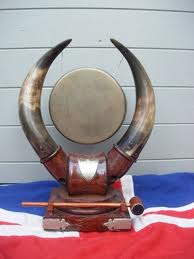
P.S. Wonder if you can make a ceramic gong? I've made a bell before; it could work.

Friday, July 8, 2011

Yee Gods!


From this:


To this:


Our osmosis water treatment unit under the sink sprung a roaring leak and the entire house was flooded up to the door sills.

The carpet and pad soaked it up like a sponge.

The yardman noticed our side patio door porch was wet and went to take a look. Then called us.

We don't know how long the leak had been going on, but enough to damage the walls and furniture.

We have a wonderful insurance company who immediately called a disaster rescue company who arrived with about 5 trucks, big pumps, fans, dehumidifiers and went to work moving all the furniture to the center of the rooms, removing soaked carpet and, when the dryness reading was reached, started tearing out the walls up to about 3-3 1/2 feet. (In the second picture, you can see from the dining area into the kitchen through the bottom of the wall.)

All, I mean all, of the cabinets in the house had to go as well as the doors--except the outside ones for now. All of the closets and storage areas had to have the bottom shelves and built-up floors removed.

So, for the past week, we have been dealing with insurance contractors, first in damage control and now in trying to figure out how to put everything back together.

Some furniture can be saved. We're in the process of working with a restorer/estimator who will take the fixable back to his workshop and start work on putting it back to new. My great barrister's bench, which is mahogany, will probably survive. As will the safari chairs and end tables. (we think). My lounge chair and the office chairs will make it.


Our very clever hide-a-bed cabinet delaminated and the mattress is toast. The front of this chest folded down to reveal a folded-up twin bed. I'll not find another one like this. And, I'm afraid the Chinese Chippendale chairs may have split legs.

An antique Empire red oak drop-leaf table is standing in the family room looking very drunk. Legs splayed like a poleaxed oxen. I think it's done for.

Our office furniture is ruined, but the paper in the files survived. The beds are all okay, since they are on high metal legs. But our bedroom furniture didn't make it.

We just put new drapes in the family room and bedroom.

And my little Featherweight Singer carrying case with it's custom card table were on the floor of the guest bedroom. They may be a loss.
My studio was virtually untouched. All the books survived as did my pictures and prints. The Christmas decorations were all in a big plastic tub. My quilts are okay. The family room sofa and chair as well as the end tables seem to be okay.

But--

Nobody died; nobody got hurt.

And it's just stuff, after all.


And our insurance with either restore it or replace it. So in the end, we're lucky. It was worth all those years of premiums.


And guess what. I not only 'get' to to a complete kitchen renovation, I get TWO kitchens and a whole house.

(Um, all the bathroom cabinets have to be replaced too.)


Paint chips.....floor tile..... granite counters.... cabinet doors ....This is going to be my life for quite a while, I think.

Tuesday, June 28, 2011

Kitchen Renovation

Note: This is not my kitchen.


What do you do when you want to renovate your kitchen?

The first rule before you do anything else is: Know Thyself.

Before jumping in, take a very long think and decide what your cooking style is. Ask yourself what kind of cook you are - how you work your kitchen and how you want your kitchen to work for you.

If you're like me, you've been saving pictures of kitchens for a long time, dreaming of sailing around in your gleaming domain, giving something a stir or hauling a delectable symphony of roasted things out of the oven.

But then

You must be ze detached, calculating Hercule Poirot and analyze how your kitchen works just for you. What kind of a cook are your? A baker? A vegetarian is always working between the 'fridge and the sink? A cookbook librarian with shelves and shelves of cookbooks? Someone who buys lots of vegetables and needs a big crisper storage area in your refrigerator? Or you like to make meals ahead and freeze them? Do you cook on the fly just throwing things together?

Do you bake a lot? if so, are you tall or short? (Stiff or limber, I might add) At what height do you visualize opening an oven door and hauling out a turkey?

I am a baker (who happens to be short. There's a joke in there somewhere.) and when we went to look at stoves at Sears, I visualized lifting my much-loved, giant pro baking pan out of an oven. Honestly, some ovens on some stoves are so low, you feel like you would have to be on your hands and knees to get something out of there. You might as well kiss your back goodbye some Thanksgiving.

On the other hand, some wall ovens are mounted so high, I couldn't see into them well enough to know if something was done let alone maneuver around enough to haul anything out.* I'd need to stand on a step or something and that's not a good idea.

I know I could have an oven mounted especially low, but then just about all the storage space above and below would have to be special ordered and even then, whatever I put in the above area or the below areas would be practically dead space. So that's a waste. And boy, do I hate waste.

*I used to have a big block of wood next to my tall kiln to stand on in order to reach the bottom for loading and unloading. I had visions of my husband coming out to the studio after hearing my yells to see only my feet sticking up in the air out of the top. Now I have a 'shorty' Skutt.

Why oh why don't they make wall oven doors that ratchet upwards like a car hatchback, out of the way so you can reach right into them? Instead, you must fetch from one side of the oven or the other and rotate the dishes out to a heat-proof surface.

I did find to my surprise that I liked one particular stove with two ovens--the large oven just below the cooktop and a shorter, smaller one nearly on the floor. I reasoned that the heavy stuff would be high enough to remove comfortably and the smaller oven would work well for smaller things. Lifting small pans and dishes from nearly floor level would be easy. (Great for proofing bread, Yea.)

And, of course, for artists, looks are important. We 'see' everything. And if you're like me, you see it every time. The room you walk into and work in a good deal of the time needs to please your eye.

So the upshot of this tirade is this: Figure out what your 'Style' is; aesthetically and operationally and then start looking and looking and looking and looking and looking.......

Saturday, April 2, 2011

Should This Kitchen be Remodeled?

Here's a panorama of the present kitchen.

Shabby Chic on Steroids.

Another coat of paint won't fix it.


The drawers are all wooden and slide on the cabinet framing, not on smooth rollers. They are so worn they don't fit well anymore.
They create sawdust in the drawer below.

Several coats of white paint were also applied and I covered the swirly Kelly green linoleum(!) countertop and backsplash on both sides of the sink with off-white mosaic tile.

I do love the dough and cutting board pull-outs, but I think this bank of cabinets have to be replaced with more workable ones. The sink would remain in the same place, the idea of two drawer units on either side are just too handy to change, but new drawers are badly needed.

I would move the dishwasher (now a portable) to the double-drawer cabinet space at the left of the sink.

In this corner, I want to put a glass-paneled door in the place where the cabinet is. The door would open out to the right.


Yes, it's a Knoll pedestal table and chairs. The table is five feet in diameter, so the center area is large in this kitchen.

I would probably keep the three windows just as they are.


The glass overhead cabinets are built in place. They are not really cabinets at all. The original owner/builder, a Swedish shipwright, built them and probably the base cabinets as well.

The original base cabinets that were on the other side of the room, (sink cabinet unit) are in our basement.

I added new handles for all the cabinets when we moved in.

I like the curved ends on these old cabinets that flank the doorway. They match the high, overhead (and strange) cabinets over the sink.

The glass cabinets hold a lot of dishes are just my height. I'm considering keeping the whole wall as it is even though both the cabinets below the glass ones above are shallow.

This is a bearing wall. A new beam would have to be installed if I took out the cabinet wall. And, even though it isn't fashionable today, I rather like the separation of the kitchen and living area--at least in this house
.


The antique painting over the door says, "Guds Frid" meaning God's Peace or Peace be with you. It was painted by the original owner/builder of the house.


The tiny pantry in the corner is so small and awkward. I would like to replace it with a floor-to-ceiling, shelved space or a corner cabinet space with an appliance garage.
I want to switch the refrigerator with a new, wider stove with two ovens and put the refrigerator where the stove is now.

The watercolor over the stove conceals an old ventelator fan which must be removed. I want to install a wall of windows from the end of the cabinet on the right to the end of the cabinet on the left, where to the new door so that the entire sink area has no overhead cabinets, just window. The view is wonderful from here.


There is a small porch off this door with antique glass windows on two sides. This is the current back door.

Of course, the old ceiling and light fixtures need to be replaced. I'll find a new place for the round glass one.

And I want to keep the floors, just have them refinished.

I like the idea of engineered stone that looks like marble. It's durable and easy to keep clean. White cabinets, "marble' or steel countertops, stainless appliances, natural wood, a touch of my own tile here and there--a good clean look for the kitchen.

So, what do you think?

Keep it?

Or renovate it down to the nub?

P.S. The walls behind the rack and stove were covered with cracked, wavy plaster and old stick-on copper tiles when we moved in. The sink cabinet top was covered with swirly deep green linoleum (!) and the cabinets were painted cream, tan and pink on the outside; sky blue on the inside. The floor was grey linoleum so old and worn, there was no pattern anymore.

I popped off the copper tiles (still have them somewhere) covered the walls with a mix of spackle and straw. I love these walls; they look so Old French, but a new finish will have to be done, I think. But maybe I could repeat the wall in the new kitchen.