If I haven't mentioned it before, we're doing two, count 'em, two kitchen renovations. One in WA and one in AZ.
The Washington one was planned; the Arizona one, not.
The Washington kitchen was charming, but old, decrepit and worn out.
The Arizona one was a whole-house disaster caused by a broken reverse osmosis water system that flooded the house. All the walls had to have the drywall removed, the framework treated for mold and the carpets ripped up. Built-in cabinets de-laminated and had to be removed. Thankfully, we have a very good insurance company that is replacing and repairing all the damage, but we are of necessity doing kitchens in stereo.
Anyway,
We're down to the studs in Washington. And when the ceiling got ripped out this Friday, look what we found!
A Great set of rafters. Unfortunately, we won't be able to raise the ceiling to the apex of the roof--support beams will have to be added and it will flatten the top somewhat, but hey, anything's better than it was before.
We also found a pristine wood floor under the top layers of parquet flooring and linoleum.
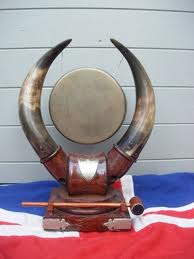
At first glance, I thought, "Round picture frame."
It is not that, but my mind went spinning into design mode and I saw this wonderful charger with a plain center and a highly decorated curved rim.
It is a form I've done before experimentally, a large plate with a curved down rim. But I have not made one with the plain center and ornate rim.
I'm clipping this as a springboard to tack up on the wall of the studio. A reminder of the next project, perhaps.
Now the full story--
It's an antique silver Japanese incense jar. The first photo was an overhead shot showing the bottom and rim of the piece.
Not a bad form either.
On the whole, Japanese silver is underrated and under priced. Only recently has it come into it's own as valuable pieces.
Same goes for Mexican silver. The quality is high in silver content in both productions, but until the value of silver began to go up, the work had little attention except for affectionados.
An artist who paints, makes sculpture, weaves and makes jewelry is confusing to the world of commerce. Even though there are people who do all these things. It almost seems you must have a certain amount of fame before 'permission' to do multi-level work.
Let's face it. Artists are a unique breed. We see things differently. We have a different attitude toward work and our own interpretation of it.
Look at the work of Bennet Bean. Instantly identifiable. Once his work hit the main stream and the gallery world, everybody wants to have one of his sculptured and painted ceramic pieces. Debate raged about how to classify it. Is it sculpture? Is it painting? Is it 'really' pottery? (Who cares?-----me.) It's art. It's beautiful. That's enough for me.
But that's not the end of the story. Did you know he designs Tibetan rugs too? And jewelry? And knives? And he paints? I'm in awe of this man.
Take a look at bennettbean.com.
I have seen some of his knives and they are a thing of absolute and breath-taking beauty.
Featured artist at the Museum of Contemporary Art in Portland OR, Jason Russell's work is the essence of distilled form married with beautifully simple design.
His is the kind of work that makes you think, "Wow, I wish I had thought of that."
"Flying dreams fall under a category of dreams known as lucid dreams. Lucid dreams occur when you become aware that you are dreaming. Many dreamers describe the ability to fly in their dreams as an exhilarating, joyful, and liberating experience.
If you are flying with ease and are enjoying the scene and landscape below, then it suggests that you are on top of a situation. You have risen above something. It may also mean that you have gained a new and different perspective on things. Flying dreams and the ability to control your flight is representative of your own personal sense of power."
Well
That's encouraging.
Last night in my dreams, I was in a space-age airport. I watched a conversation between a uniformed pilot and a stewardess and decided to collect my luggage, which was wicker, and get my car so I could drive to a ferry and head home. My luggage disintegrated before I could pick it up. (So now, I have no baggage??)
I was in a hurry so I decided to fly. I levitated as soon as I left the terminal and floated near the treetops toward a security gate of hurricane fencing. People were pointing to me, but I didn't care, I was making really good time. All of a sudden, a reporter began running on the ground trying to ask me questions.
"How are you doing that?" he asked.
"I make a counter force against gravity; it's very simple." I said. "But I have to concentrate to maintain it."
"Who are you and have you been doing this long?" he asked.
"I won't tell you my name. I've been doing this since I was a child." I answered.
Meanwhile the gate guard begins running around in circles like a bug, worried I will cross the gate without identification. I know I have the right pass, but ignore him anyway and proceed to float across the area where the gate is.
"Will you tell the secret of how you can do this?" the reporter asks.
"Yes, I'm going to do a college seminar soon on how this works." I said.
I woke up feeling absolutely wonderful, exhilarated and well-rested.
The reference article ends with:
In reality, we cannot really fly, of course. Thus, such dreams can be representative of things that are beyond your physical limitations. In your mind, you can be anybody and do anything. Another way of interpreting flying dreams is that these dreams symbolize your strong mind and will. You feel undefeatable and that nobody can tell you what you cannot do and accomplish. Such dreams are sure to leave you with a great sense of freedom.
I guess my mind is saying, "Everything is going to be okay."
Our house is slowly being put back together. Thank heavens we have another place to stay.
However
We will soon be tearing that up......but only partially. We've been planning a kitchen re-do for some years and finally, finally got down to it. Of course, practically the day we signed the contract was when the flood happened. So some fast reshuffling had to go on.
I must remember to take some before and after pictures.
Anyway
In reference to the previous post, I was thinking about pitchers. What makes a good pitcher?
I immediately thought about balance and function. First, a pitcher must feel right when you pick it up. It shouldn't be too small or too large depending on what you plan to put in it.
Almost goes without saying.
A pitcher must feel right when you pick it up--not too heavy on the bottom that you feel you cannot pour it without ease. A lot of that has to do with how high the handle sits on the body. Too low and it feels uncontrolable; too high and it feels like you cannot pour it all out. Luckily most pitchers are made well so the problem rarely comes up.
The handle should have as good heft to it, one that gives you the confidence that control will be easy.
The body must be big enough and light enough to hold the quantity of liquid needed. Nothing is worse than a pitcher that isn't large enough to contain all that you want in it.
And last, but most important, the spout must pour well. You must be able to aim the liquid to the target with confidence. Not too stingy; not too generous, the spout must also be designed to contain the liquid without the threat of spillage.
I've often wondered why pitchers have traditionally been made with no lid. Of course, fitting one would be tricky, but do-able. You would think keeping bugs out might be a good thing. Wine, fruit juice, beer--they all are attractive to bugs. The German beer mug is one example and the Mediterranean net-work cover is another, but an integrated lid just didn't seem to happen.
Some of the best examples of well-made pitchers are the old wash stand sets used in the age when indoor plumbing was absent. They were made of all shapes and adornments, designed to hold large quantities of hot water. And the decorative designs are legion.
Today, pitchers are not used that much. As a matter of fact, one show I was in brought a surprise when a very young child looked at a pitcher and asked his mom what it was. Juice boxes, canned drinks, milk cartons, plastic bottles have just about pushed the pitcher out of modern life.
I often wonder if pitchers are going to be a thing of the past. At one show I where I had a booth, a potter remarked to me that the younger generation hardly knows what they are.
If you think about it, we don't use pitchers nearly as much as earlier generations did.
Nearly all our liquids come in either plastic or cardboard-like boxes.
These two pitchers are literally worlds apart.
The Chinese one looks like castle walls, roof tiles, curly toed boots and heavy fur-lined coats. I find it interesting that the structure above the handle serves no purpose except decoration. The pitcher is solid. straightforward and no nonsense. I also like the idea of the lid.
The glaze is perfect for the form.
This pitcher is all elegance and practicality at the same time. It is designed to hold a lot of liquid.
The spout would certainly pour and do that generously. I'm guessing it is a large piece meant to hold water or a liquid that would be used liberally. It's primary use was probably for water.
The handle is hefty, yet very decorative. It's almost too light for the rest of the vessel. Because it is decorated in a reference to a dog head, I would guess it was made in either France or Germany, since both those countries used that motif in their handles.
The design touch of banding serves as to emphasize the wonderful curve of the pouring lip, the roundness of the body. What an elegant piece.
Since I can't get to my studio to work, I thought I'd share a few pictures of pots I've grabbed off the web to dream over.*
This little gem comes with not much information. All the information is in what the eye can see.
It's either Japanese or made during the period of high influence from Japan and China. You can guess just by looking at it that it isn't large; it's probably very light in the hand.
It's interesting both in form and decoration. The piece probably was mold-made. It is more than likely porcelain and has an applied lid knob and handle. The triangular shape is unique.
Two things tip you off to know it's made in the East: The side-mount handle and the spout, which hearkens to saki-pot pourers.
Just look at that glaze design! Almost like someone had taken glue and layered the pot with fine brocade. And what a sensitive bounce of bluish white and dark navy. That fine white line all around the rim sets off and calls attention to the triangular shape. A sensitive design element that adds grace to the pot.
How I would love to handle this pot. To turn it over and see what the base looks like, what clay was used, to try pouring out of it. (Although you already know it would do an excellent job with nary a drip.)
What an inspiration to use for shape and decoration.
*If you have a Mac, it's easy to click on a jpeg, drag it to the desktop, let it go. It will sit there waiting to be opened or drug into another folder to be stored for later viewing. I usually re-name the file as a memory aid, or if I know who made the piece, the artist's name.
Our osmosis water treatment unit under the sink sprung a roaring leak and the entire house was flooded up to the door sills.
The carpet and pad soaked it up like a sponge.
The yardman noticed our side patio door porch was wet and went to take a look. Then called us.
We don't know how long the leak had been going on, but enough to damage the walls and furniture.
We have a wonderful insurance company who immediately called a disaster rescue company who arrived with about 5 trucks, big pumps, fans, dehumidifiers and went to work moving all the furniture to the center of the rooms, removing soaked carpet and, when the dryness reading was reached, started tearing out the walls up to about 3-3 1/2 feet. (In the second picture, you can see from the dining area into the kitchen through the bottom of the wall.)
All, I mean all, of the cabinets in the house had to go as well as the doors--except the outside ones for now. All of the closets and storage areas had to have the bottom shelves and built-up floors removed.
So, for the past week, we have been dealing with insurance contractors, first in damage control and now in trying to figure out how to put everything back together.
Some furniture can be saved. We're in the process of working with a restorer/estimator who will take the fixable back to his workshop and start work on putting it back to new. My great barrister's bench, which is mahogany, will probably survive. As will the safari chairs and end tables. (we think). My lounge chair and the office chairs will make it.
Our very clever hide-a-bed cabinet delaminated and the mattress is toast. The front of this chest folded down to reveal a folded-up twin bed. I'll not find another one like this. And, I'm afraid the Chinese Chippendale chairs may have split legs.
An antique Empire red oak drop-leaf table is standing in the family room looking very drunk. Legs splayed like a poleaxed oxen. I think it's done for.
Our office furniture is ruined, but the paper in the files survived. The beds are all okay, since they are on high metal legs. But our bedroom furniture didn't make it.
We just put new drapes in the family room and bedroom.
And my little Featherweight Singer carrying case with it's custom card table were on the floor of the guest bedroom. They may be a loss.
My studio was virtually untouched. All the books survived as did my pictures and prints. The Christmas decorations were all in a big plastic tub. My quilts are okay. The family room sofa and chair as well as the end tables seem to be okay.
But--
Nobody died; nobody got hurt.
And it's just stuff, after all.
And our insurance with either restore it or replace it. So in the end, we're lucky. It was worth all those years of premiums.
And guess what. I not only 'get' to to a complete kitchen renovation, I get TWO kitchens and a whole house.
(Um, all the bathroom cabinets have to be replaced too.)
Paint chips.....floor tile..... granite counters.... cabinet doors ....This is going to be my life for quite a while, I think.
All images displayed in this blog are included in the interest of sharing aesthetic appreciation and are solely used for the exploration of creative thought and work. There is no intent to profit or exploit other artist's work.
Whenever possible, attribution will be noted. However such inclusions are not always possible.
I also sometimes write about needlearts & fibers
Check it out on www.fiberneedle&thread.blogspot.com
Designer of the new CLAYART logo and CLAYART wiki symbol.
38th Annual Toys Designed by Artists - November 21 - January 6, Arkansas Arts Center, 501 E. 9th St., Little Rock AR. My latest ray gun will be on display. (See SEP 5 post. The ray gun with the wine glass bottoms attached.)
The Art Stop in Tacoma has a selection of some of my pieces. (See below) They have many wonderful things. Well worth a visit.
Teapot Show at The Art Stop, 940 Broadway Tacoma, WA 98402, (253) 274-1630 starting May 5, 2012
Here and There: Contemporary Nordic-American Ceramics. In conjunction with NCECA National Convention, Seattle WA. Three pieces will be on display at the Nordic Heritage Museum, 3014 NW 67th St., Seattle WA. The show dates are March 9 to May 6, 2012.
Ceramics Monthly, Jan. 2011, pg. 13
Member's gallery Jeanette Harris on http://www.southernarizonaclayartists.org
New Webpage: http://fiberneedle&thread.blogspot.com/
A City Full of People by Peter Earle - More research into the period of 1650-1750 re genealogy and the hunt for the elusive Thomas Manchester born ca 1620 in England.
The Pirate Wars by Peter Earle - If you are interested in history, Peter Earle is a master at the period roughly from 1590 to 1700; especially English maritime history.
Watching the English by Kate Fox - A delightful social anthropologist's complete analysis of English behavior and character. A sheer delight if you have lived among them or know some. Spot on in every aspect.
The Valley of Amazement by Amy Tan - Another intriguing novel about life in China in the early 1900s, the book covers four generations of women's lives and relationships during the trade boom and intermeshing of Eastern and Western cultures and it's impact upon their lives and relationships.
Islanders, the Pacific in the Age of Empire by Nicholas Thomas - A study in the early history of European contact with the far flung Pacific cultures. Quite a heavy tome laden with data. Quite a wade, but very interesting non the less.
Sharp Objects by Julian Flynn - If I hadn't read Gone Girl, I would not have read this book. Gone Girl is by far a superior book. This one, not so much. Rather raw and undeveloped for my tastes.
The 100 Foot Journey by Richard Morais - Interesting novel combining Indian family culture, French snobbery, cooking and a life that weaves it's way through it all. Good read.,
Bellow Stairs by Margaret Powell - The classic kitchen maid's memoir of being 'in service' in the early 1900s. The inspiration for Upstairs Downstairs and ultimately Downton Abbey. Good read.
The Autistic Brain, Thinking Across the Spectrum by Temple Grandin & Richard Panek - Excellent survey of the extensive range of autism; great reference to the latest research and excellent description of the spectrum. Highly recommended.
Sailors, English Merchant Seamen 1650-1775 by Peter Earle - Historical account of maritime culture of this period; excellent reference.
The Elephant Keeper by Christopher Nicholson - Set in the 1700s England, a stable hand is put in charge of two elephants and must learn about them as he goes.
The Plantagenets by Dan Jones - 510 pages of the history of Plantagenet family's rule, this book reads like a novel. It would make a so-much-better TV drama instead of Thrones. And it's REAL.
Seedlings by Ethel Lee Miller - Written by my good friend, stories of relationships. A perfect nightstand companion for reading and contemplation, deftly told by a master communicator.
Good Women by Jane Stevenson - Three highly amusing stories, each quite different, of women who might not strictly be classified as 'good', but certainly distinct.
A Life of Richard Badiley: Vice-Admirla of the Fleet - A research read, the life of a Royal Navy captain during the 1600s.
The Hundret Secret Senses by Amy Tan - Tan is alway good for a ripping yarn.
The Island of Lost Maps, A True Story of Cartographic Crime by Miles Harvey, a recounting of the systematic theft of priceless maps from collections in public libraries and institutions by Gilbert Bland. Well written, informative and dismaying book.
Sixpence House by Paul Collins - Chronicle of an American family settling down in Hay-on-Wye, a Welch town with more bookstores and books than nearly the population of Wales. Talented writer.
Tyler's Row, a "Miss Read" book by a anon. writer - Cosy English village in all it's splender.
Royals by Kitty Kelley - Ran across this at the used book store. Dishy history of British royals.
Geisha, A Life by Mineko Iwsaki - A true account of the life of a top Geisha of Kyoto. Fascinating account.
The Berrybender Narratives by Larry McMurtry - From the moment you read the first paragraph, this book sweeps you up and takes you on a wild ride through the 1830's American West in the company of some of the most colorful characters you would ever hope to meet. Jump in!
Gone Girl by Gillian Flynn - It is rare to discover a book that leaves you guessing at every page turning. I must say, this is one of the most original, engrossing books I have read in a long time. I will read her only other two books as soon as I can find them. Highly recommended.
Horseman, Pass By by Larry McMurtry - Semi-autobiographical, this book captures the ennui of adolescence and life on an isolated Texas cattle ranch in the 1950s or 60s. Great dialog writing skillfully reveals the characters' emotions. The descriptions of the settings make you hear the house screen door slam, the windmill's creek and smell the dew on the pastures.
Making Haste from Babylon, the Mayflower Pilgrims and Their World by Nick Bunker- Well researched and presented encapsulation of the political, religious, economic and cultural environment that impacted and made the world of our ancestors. Very well written. Half-way through of carefully reading with a highlight pen in one hand.
The Uncommon Reader by Alan Bennett - Wit crackles on every page as Mr. Bennett imagines Queen Elizabeth encountering a bookmobile parked at the palace kitchen entrance and discovers the joys of reading for pleasure.
Empire at the Periphery by Charles J. Koot - A treatise on British Colonist, Anglo-Dutch Trade, and the Development of the British Atlantic, 1621-1713.
Sailors, English Merchant Seamen 1650 - 1775 - A complete portrait of the lives of seamen of the period. Research source for genealogical investigations. Very good resource.
Other Voices, Other Rooms by Truman Capote
The Far Side of the World by Patrick O'Brien - Just got me feet wet, but I'm sure I'll enjoy the trip.
Literary Life, A Second Memoir by Larry McMurtry - I haven't found the first memoir, but this one is interesting concerning his early writing and book collecting. I will search for the first and third.
A Map of the World by Jane Hamilton - Wading through...not too happy with the main characters; I'm sure nothing will turn out well....Update: One of the most depressing books I've ever read. I won't be looking for this author.
Mysteries of the Middle Ages by Thomas Cayhill - Fifth in a series titled The Hinges of History, this is a very interesting account of the high middle ages including the latest research on this time period. Well worth the read.
Wolf Hall by Hilary Mantel - A historical fiction about the life of Thomas Cromwell (Not to be confused with Oliver Cromwell.) Unique writing style and slow going, but good window into the time of Henry VIII.
A Perfect Red by Amy Butler Greenfield - The saga and history of the search for the treasured pigment. You will better understand red after reading this book.
Empire of the Ants by Bernard Werber - Originally in French, this book is a fascinating work of fantasy/reality science. Set against fascinating data about the Argentine Ant, the fiction works as a wonderful and intriguing mystery that will keep you absorbing quasi-scientific data while consuming the mysterious plot line wanting to know the outcome. I only wish there were more translations of his books.
Cannery Row by John Steinbeck - What can I say, it's Steinbeck.
The Eustace Diamonds by Anthony Trollope - a jewel in itself of English manners, society, pretensions and family intrigues during Victorian England. A delight for any Anglophile.
The Time Traveler's Guide to Medieval England by Ian Mortimer - Excellent boots on the ground view of what life was like in England between 1300 and 1400. Highly Recommended.
The Girl who Played with Fire by Stieg Larsson - Better than the first, more intricate and insight into the motivations behind the quirky 'girl'.
Monkey Love by Dr. Robert M. Sapolsky - an exploration of the old question of nature vs nurture with a bit of genetic engineering thrown in.
Why Zebras Don't Get Ulcers by Dr. Robert M. Sapolsky - Guide to stress, stress-related diseases as presented by a biologist, Dr. Sopolsky writes about stress with wit and ease.
Introducing Agatha Raisin by M.C. Beaton j- Two stories: Quiche of Death and The Vicious Vet, both mysteries. A new writer for me. Mystories set in the Cotswolds of England. A real delight to read.
Wheat Belly by William Davis, MD - A convincing argument about weight-gain and our overly-engineered wheat source, I've lost 13 pounds following his advice!!! A must read for anyone concerned with eating healthily.
Slight Mourning by Catherine Aird - Aird out-Christies Christie and leaves you guessing about who done it. Dripping with English villege-ana, a crisp writing style and well-knitted plot. I've found a new mystery writer thanks to my sis.
Nell Gwynn: Mistress to a King by Charles Beauclerk - direct descendent of the only son of this union, the author has been able to pull from family archives for this window into the rowdy Royals of the late 1700's.
Musicophilia by Oliver Sacks - extremely interesting read about the brain and music.
Water for Elephants by Sara Gruen - Great piece of fiction. Highly recommended.
History of the Colony of New Haven to its absorption into Conn. by Edward E. Atwater
Perry of London - History of the Perry family, merchant traders involved in early colonial history.
Curtain by Agatha Christie - Christie grew to hate Poirot. So she killed him off in this story--much to the dismay of her readers.
Bats Sing, Mice Giggle by Shanor and Kanwal - Book of interesting facts about the abilities of the animal world, but is in bad need of a good editor. Rather rambling jumble of interesting facts.
The Unconsoled by Kazuo Ishiguro - Aaaagh! Stopped reading this halfway through. I totally lost patience with the (?) plot And the main character.
Skeleton Man by Tony Hillerman - my occasional dip into mystery, a Southwestern setting makes this book especially fitting.
Stiff by Mary Roach - Strangely compelling, often irreverent and funny compendium of what can and does happen to our mortal coil.
The Far Traveler by Nancy Marie Brown, a study of the archeological record, the sagas for a reconstruction of the real life of a VIking woman who lived ca. 1000 AD. Fascinating read.
In the President's Secret Service - Ronald Kessler, an inside look at various presidents and their protection by the Secret Service, the history and workings of that service.
Eva Luna - Spanish Language version of Schererazade, this is a collection of short stories written by Isabelle Allende
Anthill by E. O. Wilson - Fascinating story of the life of an anthill; not so great story of the people who live around it.
A Primate's Memoir by Robert M. Sapolsky - fascinating, entertaining, informative, Can't say enough about this great book. I'm 1/3 into it and already I've looked up all the rest of his books, lining them up to order and read. Highly recommended if you're interested in primates both 4 and 2 legged.
The Girl with the Dragon Tattoo by Stieg Larsson - Intricate plot and a good read, but some graphic violence that I could do without.
Poland by Mitchener
Sailing the Wine-Dark Sea, Why the Greeks Matter by Thomas Cahill - One of the Hinges of History series
Agatha Christie's Secret Notebooks by John Curran Tedious, but interesting insight into AC's seemingly random writing notes.
Texas by Mitchner - 1090+ pages - this is going to take a while.....
Outliers by Malcolm Gladwell
Prizzi's Family, Richard Condons hilarious prequel to Prizzi's Honor
Mysteries of the Middle Ages and the beginning of the modern world by Thomas Cahill - just started and it looks very interesting indeed
Lost on Planet China by Maarten Troost another hilarious sojourn into another culture.
My Life in France by Julia Child and Alex Prud'homme. If you liked Julie & Julia, the movie, you'll love this book.
Getting Stoned with Savages by J. Maarten Troost, Hilarious account of life in the tropical paradise of Vanuatu and Fiji including poisonous centipedes, cyclones, and the hazards of Kava
The Good Good Pig by Sy Montgomery - It's good to know a pig.
Uncommon Clay by Margaret Maron, murder mystery set in the Seagrove NC clay community
The Ladies Auxiliary by Tova Mirvis, a novel about the dynamics of a Jewish community in Memphis TN during the '60s
Salt, A World History by Mark Kurlansky - A fascinating survey of the scientific, political, religious and culinary history of 'the only rock we eat."
The Lost Painting by Jonathan Harr - the story of a lost Caravaggio masterpiece
Saving Fish from Drowning by Amy Tan, a great yarn about travelers in Burma
The Old Wive's Tale by Arnold Bennett
Bird by Bird by Anne Lamontt, Some Instructions on Writing and Life
Eleanor of Aquitaine by Alison Weir. Eleanor is my pregenator (pregenatoress?)
The Sex Lives of Cannibals by J. Maarten Troost, a hilarious account of life on Kiribati, a Pacific Island nation.
An Unquiet Mind, A Memoir of Moods & Madness by Kay Redfield Jamison
Dark Mission by Richard C. Hoagland and Mike Bara
On Writing by Stephen King
Gentlemen of the Road by Michael Charbon - A sort of graphic novel in wordy prose.
Rapture for the Geeks
Stubborn Twig - Three generations in the life of a Japanese American Family
Jewels by Victoria Finlay - beautifuly researched story of precious stones
P.G. Wodehouse by David A. Jasen - The man who wrote the Jeeves & Wooster stories so beautifly portrayed by Stephen Fry and Hugh Laurie.
A History of Their Own by Bonnie S. Anderson and Judith P. Zinsser, Vol. 1 - an extremely well-researched study of women in relation to the society from prehistory to the 17th cent. Highly recommended
Talking to the High Monks in the Snow by Lydia Minatoya
It Was a Dark and Stormy Night compiled by Scott Rice, an outrageously funny compilation of entries into the yearly Bulwar-Lytton contest.
All of Alexander McCall Smith's three Professor Von Inglefeld's "Portuguese Irregular Verbs" books
All of The No. 1 Ladies' Dective Agency books by Alexander McCall Smith
Friends, Lovers, Chocolate by Alexander McCall Smith
Color by Victoria Finlay - a fascinating study of the history of color sources and origins.
First Ladies by Margaret Truman (sandwiched between the Adams books--it's taking a long time!)
John Adams 2 Vols. by Page Smith, an old autobiography written in 1962-will read the Mccallum version after this.
Moab is my Washpot by Stephen Fry
Shelf Life by Suzanne Strempek Shea
Lettering on Ceramics by Mary White
Listening Woman by Tony Hillerman
Halo of the Sun by Noel Bennett
Migraine by Oliver Sacks
Mayflower by Nathaniel Philbrick
Mistress of the Art of Death by Ariana Franklin
Northanger Abbey by Jane Austen - the book I took to Las Vegas. What a contrast. (eye narrow) Or is it?
Misquoting Jesus by Bart D. Ehrman
Outlander - Ok ok, ya twisted my arm. Tedious and prissy writing, that is until Jamie Frazier shows up!
The Grays - Good and creepy Whitley Strieber
A Spot of Bother by Mark Haddon, author of The Curious Incident of the Dog in the Night-time, another good book
How the Irish Saved Civilization by Thomas Cahill
A Stranger in Her Native Land, Alice Fletcher and the American Indians by Joan Mark
Aunt Dimity Digs In by Nancy Atherton
The Road to Miyama by Leila Philip
Quite Honestly by John Mortimer
The Life of Pi by Yann Martel
The Vintner's Luck by Elizabeth Knox
China Paint & Overglaze by Paul Lewing
Spice by Jack Turner
Robert the Bruce by Ronald McNair Scott (Robert the B is one of my ancestors)
Strange Pilgrims by Gabriel Garcia Marquez
The Discoverers by Daniel J. Boorstin
The Gun Seller by Hugh Laurie
Uncle Tungsten by Oliver Sacks
Beowulf by Seamus Heaney
300 The Art of the Film by Tara DiLullo
The Gates of Fire by Steven Pressfield
The Greek Way by Edith Hamilton
Followers
Recommended Websites--just click on the discriptions